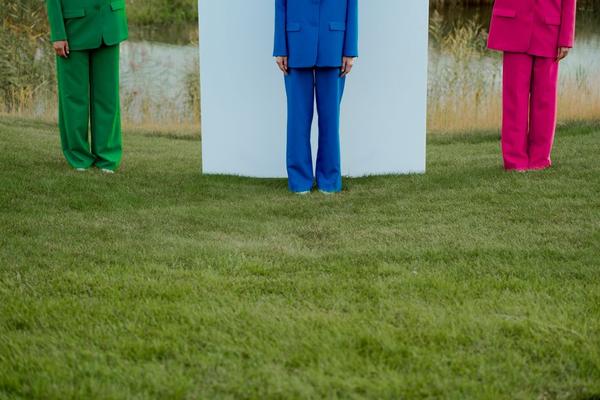
Muted sage green has earned its place in modern wardrobes: calm, flattering and easy to wear. But this season’s most energising alternative sits at the opposite end of the spectrum. Colour block outfits are bringing saturated shades, unexpected pairings and a sense of play back into everyday dressing. The appeal is not about wearing every bright colour at once. It is about placing two or three clear blocks of colour together so the outfit looks intentional rather than busy.
Spring and summer 2026 collections have made the direction especially visible, with designers pairing unexpected shades such as lilac with red or vivid blue with yellow. On the high street, the same idea works through a strong-coloured knit, tailored trousers or a contrasting jacket.
What makes an outfit colour blocked?
Colour blocking usually means combining solid areas of contrasting or neighbouring colour, with little reliance on prints. The clean separation between shades creates the statement. A cobalt jumper worn with tomato-red trousers is colour blocking; a floral dress containing those colours is not quite the same thing because the shades are blended through a pattern.
The most wearable colour block outfits use simple silhouettes. Straight-leg trousers, plain shirts, slip skirts and structured blazers give strong shades room to work. Keeping at least one element streamlined makes bold colour outfits feel polished rather than costume-like.
Start with one confident pairing
The easiest way to try the trend is to choose two colours and repeat neither unnecessarily. Pick one shade for the main garment and another for a supporting piece. For example, wear a raspberry-pink midi skirt with a burnt-orange crew-neck jumper, then finish with tan or chocolate accessories. The colours remain the focus, while the neutral shoes and bag stop the outfit from feeling overloaded.
A useful real-world test is the “coat-off” rule. Imagine arriving at the office, restaurant or event and removing your outer layer. The remaining outfit should still look complete. A royal-blue coat over a green dress may look striking outside, but if the coat is doing all the work, the look loses impact indoors. Add a blue belt, shoe or small bag so the colour story continues after the coat comes off.
Reliable colour combinations to try
Red and pink create a warm pairing for occasionwear. Blue and orange feel energetic, while softer lilac and butter yellow are easier for daytime. Green with cobalt looks modern, and teal with mustard offers a richer option for cooler UK weather.
For a gentler starting point, pair two shades from the same colour family. Powder blue with cobalt, pale pink with burgundy, or mint with forest green still creates visible blocks while keeping the overall effect cohesive. This tonal approach is one of the most useful colour blocking tips for anyone who normally lives in beige, navy or black.
How to make bold colour wearable in the UK
Real wardrobes need to handle grey mornings, office dress codes and sudden rain. Layers are therefore your best tool. A bright cardigan over a contrasting shirt, coloured tights beneath a dress, or a vivid scarf tucked into a structured coat lets you use the statement colour trend without depending on warm weather.
Texture also matters. Two highly saturated synthetic-looking fabrics can make an outfit appear harsher than intended. Mixing textures adds depth: try a soft wool jumper with a satin skirt, crisp cotton with brushed suede, or denim with fine knitwear. The colour contrast remains strong, but the different surfaces make the combination feel considered.
Use sage green as a bridge, not a retreat
If you already own sage-green pieces, there is no need to abandon them. Sage can become the quiet bridge between neutral dressing and full colour blocking. Pair sage trousers with a strong violet blouse, or wear a sage overshirt over a coral dress. The muted green lowers the intensity while still allowing the brighter shade to stand out.
This contrast also gives the wardrobe more range. One week, a sage skirt can be worn with cream for a soft, minimal look; the next, it can be paired with cobalt for a much bolder result. Treating muted colours as flexible foundations is more useful than dividing clothes into “neutral” and “statement” categories.
Keep accessories deliberate
Accessories should support the blocks rather than introduce unrelated shades. Once two strong colours are present, choose a bag or shoe that repeats one of them, or use a restrained neutral.
For more ideas on building outfits around seasonal shades, explore our guide to wearable colour trends. A capsule wardrobe guide can help you identify which neutral basics will support brighter purchases, while our styling tips for statement pieces can show how to make one standout item work across several looks.
Common colour-blocking mistakes to avoid
The biggest mistake is adding colour without a clear hierarchy. Decide which shade is dominant and which is supporting. Avoid combining neon colour, oversized proportions, bold prints and heavy accessories in one look. Colour blocking works best when the eye can read the outfit quickly.
Do not rely too heavily on strict colour-wheel rules either. They are useful for inspiration, not a test you must pass. Your skin tone, personal taste and the exact depth of each shade matter more. A deep aubergine may suit you better than bright purple, and rust may feel more natural than pure orange. Adjust the formula until the colours feel like an extension of your style.
Frequently asked questions
Can colour block outfits include neutral colours?
Yes. Black, white, cream, navy, grey and brown can separate or ground brighter shades. A white shirt between a green jacket and blue trousers, for example, creates breathing space while keeping the outfit visibly colour blocked.
How many colours should I wear at once?
Two colours are the easiest starting point. Three can work when one is used in a smaller proportion, such as a bag, shoe or knit layered beneath a jacket. More than three requires careful repetition and very simple garment shapes.
Does colour blocking work for workwear?
It can. Choose tailored pieces and slightly deeper shades, such as burgundy with pink, teal with navy, or cobalt with charcoal. A bright blouse under a contrasting suit is often easier to wear professionally than two equally loud separates.
Can petite or plus-size shoppers wear colour blocking?
Absolutely. The key is placement rather than size. Vertical blocks can lengthen the silhouette, while a strong colour placed where you want attention helps shape the overall look. Fit and proportion matter more than avoiding any particular shade.
A bolder wardrobe can still feel like you
Colour blocking is not a demand to become a maximalist overnight. It is a practical way to make familiar clothes feel fresh by changing the relationships between colours. Begin with one pairing, keep the shapes clean and use neutrals or muted sage when you need balance. The strongest looks are not necessarily the loudest; they are the ones in which every colour appears to have been chosen on purpose.